
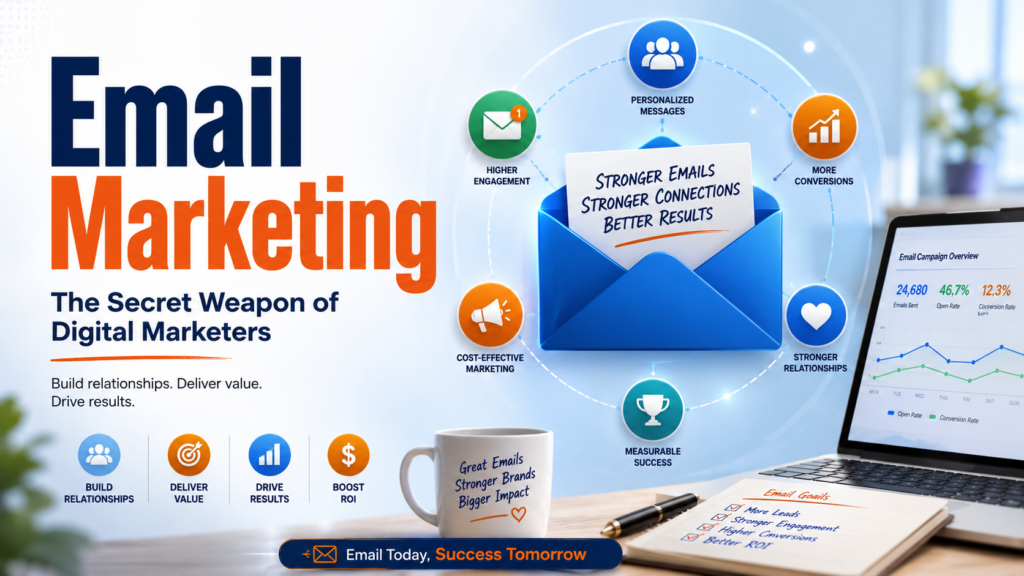
While social media and search engines get most of the attention, email marketing remains one of the highest returning channels in digital marketing. For every dollar spent, email consistently delivers one of the best returns on investment of any marketing channel. If you own a website and want direct access to your audience’s inbox, email marketing deserves a central place in your strategy.
Thank you for reading this post, don't forget to subscribe!What Is Email Marketing?
Email marketing is the practice of sending targeted messages to a group of subscribers with the goal of building relationships, promoting products, sharing valuable content, and driving conversions. Unlike social media, where algorithms control who sees your content, email gives you a direct line to people who have already shown interest in your brand.
Why Email Marketing Still Works
- Direct Access to Your Audience. Subscribers chose to hear from you, so your message lands directly in their inbox rather than competing with an algorithm.
- High Return on Investment. Email consistently outperforms many other digital channels in terms of revenue generated per dollar spent.
- Personalization at Scale. Modern email tools let you segment audiences and tailor messages based on behavior, preferences, and purchase history.
- Builds Long Term Relationships. Regular, valuable emails keep your brand top of mind and nurture trust over time.
- Measurable Results. Open rates, click rates, and conversions give you clear insight into what is working.
Types of Marketing Emails
- Welcome Emails. Introduce new subscribers to your brand and set expectations.
- Newsletters. Share updates, tips, and curated content on a regular schedule.
- Promotional Emails. Announce sales, discounts, or new product launches.
- Abandoned Cart Emails. Remind shoppers about items left in their cart to recover lost sales.
- Re engagement Emails. Win back subscribers who have gone quiet.
- Transactional Emails. Order confirmations and receipts that also offer a chance to build trust.
Building an Effective Email Marketing Strategy
1. Grow a Quality List
Focus on attracting subscribers who genuinely want to hear from you. Use lead magnets like free guides, discounts, or exclusive content to encourage signups.
2. Segment Your Audience
Not every subscriber wants the same message. Segment your list by interests, purchase history, or engagement level to send more relevant emails.
3. Craft Compelling Subject Lines
Your subject line determines whether an email gets opened at all. Keep it clear, curiosity driven, and relevant to the content inside.
4. Personalize Your Content
Use subscriber names, purchase history, and behavior data to make emails feel tailored rather than generic.
5. Design for Mobile
A large share of emails are opened on phones. Use responsive templates that look great on any screen size.
6. Include a Clear Call to Action
Every email should guide the reader toward one clear next step, whether that is reading a blog post, making a purchase, or signing up for an event.
7. Test and Optimize
Run A/B tests on subject lines, send times, and content formats. Use the data to continuously refine your approach.
8. Monitor Key Metrics
Track open rates, click through rates, conversion rates, and unsubscribe rates to understand what resonates with your audience.
Common Email Marketing Mistakes to Avoid
- Buying Email Lists. Purchased lists lead to poor engagement and can damage your sender reputation.
- Sending Too Frequently. Overloading subscribers’ inboxes leads to higher unsubscribe rates.
- Ignoring Mobile Optimization. Poorly formatted emails on mobile devices frustrate readers and hurt engagement.
- Neglecting Personalization. Generic, one size fits all emails perform far worse than tailored messages.
- Skipping Analytics. Without tracking performance, you cannot know what is actually working.
Final Thoughts
Email marketing is far from outdated. It remains one of the most reliable and cost effective ways to build relationships, nurture leads, and drive conversions for your website. By focusing on list quality, personalization, and consistent value, you can turn your inbox presence into one of your most powerful marketing assets.