
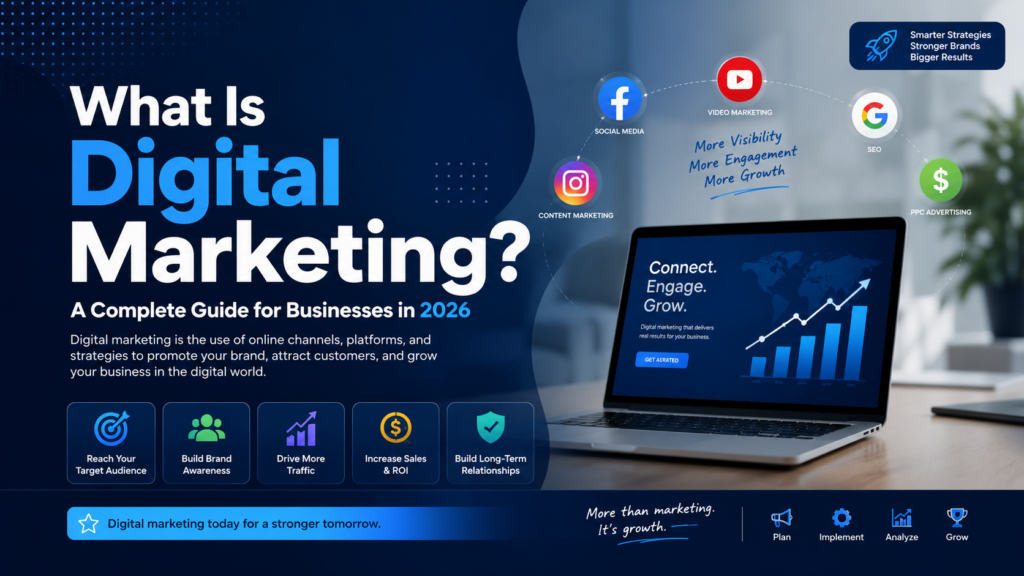
Meta Title: What Is Digital Marketing? A Complete Guide (2026) Meta Description: Learn what digital marketing is, its key channels, and how to build a strategy that drives traffic, leads, and sales for your business.
Thank you for reading this post, don't forget to subscribe!If you’re running a business today, chances are your customers are searching for you online before they ever hear your name from a friend. That’s the reality digital marketing was built for meeting people where they already spend their time: search engines, social feeds, inboxes, and apps.
This guide breaks down what digital marketing actually is, the core channels that make it up, and how to put together a strategy that works even if you’re starting from zero.
What Is Digital Marketing?
Digital marketing is the practice of promoting products, services, or brands using online channels and digital technologies. Unlike traditional marketing think billboards, TV ads, or flyers digital marketing lets you target specific audiences, track results in real time, and adjust your approach based on actual data instead of guesswork.
At its core, digital marketing answers one question: how do you get the right message in front of the right person at the right time?
Why Digital Marketing Matters
A few reasons digital marketing has become essential rather than optional:
- Measurability — Every click, view, and conversion can be tracked, so you know exactly what’s working.
- Cost efficiency — Small businesses can compete with larger ones by targeting niche audiences instead of paying for mass-market ad space.
- Reach — Billions of people are online daily, giving even small brands access to a global audience.
- Personalization — Data lets you tailor messaging to different audience segments instead of using one generic pitch.
The Core Channels of Digital Marketing
1. Search Engine Optimization (SEO)
SEO is the process of improving your website so it ranks higher in search engine results for relevant keywords. It involves technical fixes (site speed, mobile-friendliness), on page work (keyword-optimized content, headings, meta tags), and off-page efforts (backlinks, reputation). Good SEO brings in “free” traffic over the long term, which is why it’s often considered the foundation of a digital strategy.
2. Content Marketing
Content marketing means creating valuable material blog posts, videos, guides, infographics to attract and retain an audience. It works hand-in-hand with SEO: search engines reward websites that consistently publish helpful, relevant content.
3. Social Media Marketing
This involves building a presence on platforms like Instagram, LinkedIn, TikTok, and X to engage audiences, build brand awareness, and drive traffic back to your site. Organic posting and paid social ads both fall under this umbrella.
4. Pay-Per-Click (PPC) Advertising
PPC lets you place ads on search engines or social platforms and pay only when someone clicks. Google Ads and Meta Ads are the most common platforms. It’s a fast way to generate traffic while your organic (SEO) efforts build up over time.
5. Email Marketing
Despite being one of the oldest digital channels, email marketing remains one of the highest-ROI tactics available. It’s used for nurturing leads, promoting offers, and keeping past customers engaged.
6. Affiliate and Influencer Marketing
Businesses partner with affiliates or influencers who promote products to their own audiences in exchange for a commission or fee. This extends reach without requiring a business to build that audience from scratch.
How to Build a Simple Digital Marketing Strategy
You don’t need to do everything at once. Here’s a practical starting sequence:
- Define your goal. More traffic, more leads, more sales pick one primary objective to guide your channel choices.
- Know your audience. Understand who you’re trying to reach, what problems they have, and where they spend time online.
- Start with SEO and content. These compound over time and are the most cost-effective long-term investment.
- Layer in paid ads if you need faster results. PPC and social ads can fill the gap while organic traffic grows.
- Build an email list early. It’s an owned channel you’re not at the mercy of an algorithm.
- Track and adjust. Use analytics tools to see what’s actually converting, then double down on what works.
Common Digital Marketing Mistakes to Avoid
- Focusing only on one channel instead of building a mix
- Ignoring mobile optimization
- Publishing content without keyword or audience research
- Not tracking conversions, only vanity metrics like likes or impressions
- Expecting SEO results overnight it typically takes several months to see meaningful movement
Frequently Asked Questions
Is digital marketing still worth it for small businesses? Yes it’s often more accessible for small businesses than traditional marketing because you can start with a limited budget and scale what works.
How long does SEO take to show results? Most businesses start seeing measurable improvement in 3–6 months, with stronger results building over 6–12 months.
What’s the difference between SEO and PPC? SEO drives organic (unpaid) traffic over time, while PPC delivers immediate traffic but stops the moment you stop paying.
Final Thoughts
Digital marketing isn’t about doing everything it’s about choosing the right combination of channels for your audience and goals, then staying consistent. Start with SEO and content as your foundation, add paid and social channels as you grow, and let the data guide your next move.
Want help figuring out which digital marketing channels are the best fit for your business? Contact us to get started.